
# San Judas Tadeo Tattoo Meanings & Placement Guide: 2026 Trends
In the high-stakes world of permanent ink, few images carry as much weight, devotion, and cultural resonance as San Judas Tadeo. Known globally as the Patron Saint of Lost Causes and Desperate Situations, St. Jude Thaddeus has moved beyond the walls of the cathedral and onto the skin of millions. As we move through 2026, the "San Judas" tattoo has evolved from a traditional religious icon into a cornerstone of modern Chicano art, blending ancient spirituality with cutting-edge tattooing techniques.
Whether you are seeking divine protection, honoring a miracle received, or simply drawn to the powerful aesthetics of Chicano realism, this guide explores everything you need to know about San Judas Tadeo tattoos in 2026.
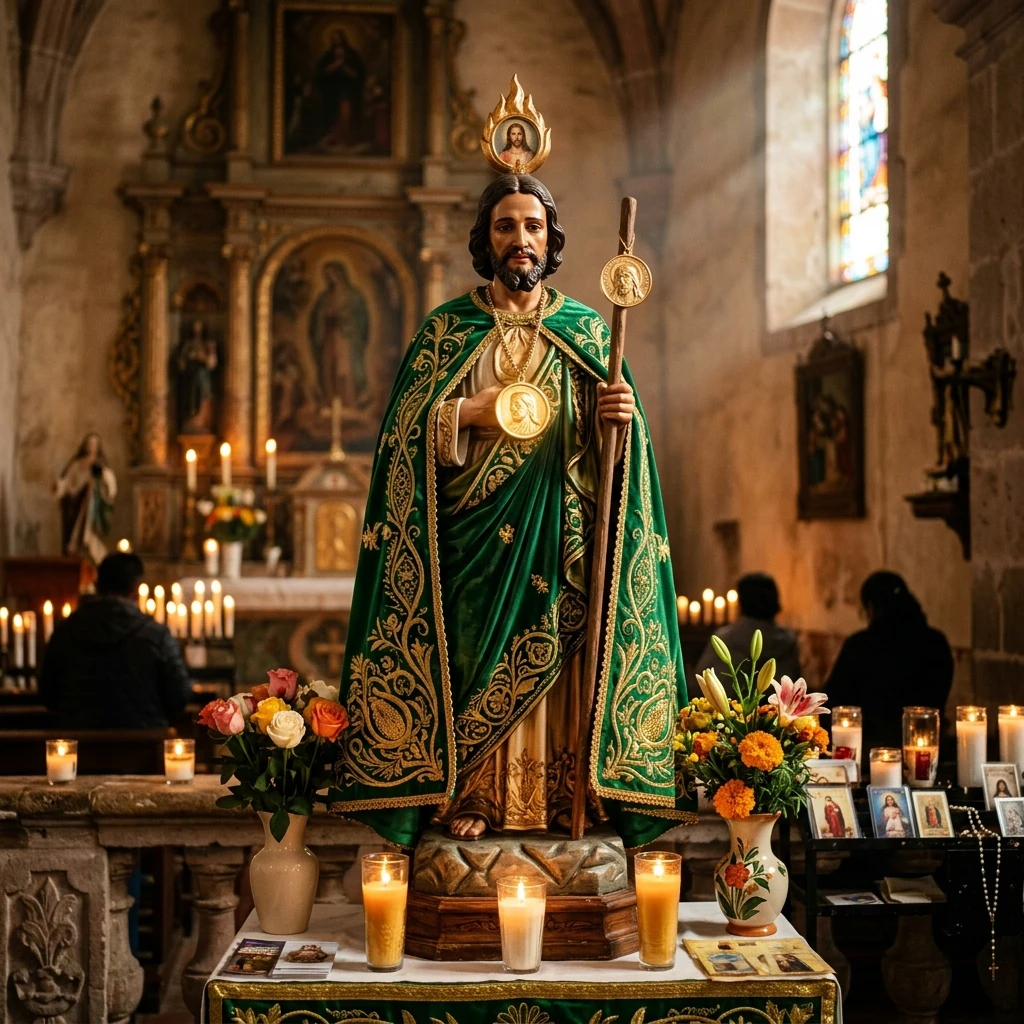
San Judas Tadeo: The Protector of the Streets
The Saint of the Impossible: A Legacy of Faith
San Judas Tadeo was one of the twelve apostles of Jesus. Often confused with Judas Iscariot (the betrayer), St. Jude Thaddeus spent centuries in the shadows until his reputation as a powerful intercessor for the "hopeless" began to spread. In Mexican and Chicano culture, he is more than just a biblical figure; he is a protector of the marginalized, the underdog, and those facing impossible odds.
The historical Jude Thaddeus was a son of Clopas and Mary, a cousin of Jesus. His travels took him through Mesopotamia, Libya, and Persia, where he eventually met his martyrdom. Because his name was so similar to the man who betrayed Jesus, early Christians were hesitant to pray to him. However, the Church later recognized that those who turned to Jude often received the most miraculous results precisely because he was the "last resort." This theological "underdog" status is what makes him so appealing to the tattoo community.
In 2026, the devotion has reached a fever pitch. On the 28th of every month, thousands flock to the Church of San Hipólito in Mexico City, many carrying life-sized statues or showing off fresh ink. This "living faith" is what fuels the demand for high-quality, realistic San Judas tattoos. For many, getting a San Judas tattoo is not just about art—it is a "manda" (a sacred promise). It is a way to carry a prayer in perpetuity. In 2026, we see a surge in young collectors who are rediscovering these roots, blending traditional Catholic iconography with the grit and soul of street culture.
The Theology of Intercession in Tattoo Art
Why do people choose to ink a saint rather than Jesus himself? In Catholic theology, saints are intercessors—messengers who take our prayers to God. In the context of tattoo art, San Judas acts as a "spiritual lawyer." If you are in legal trouble, facing health issues, or struggling with addiction, you don't just want a symbol; you want a representative.
Tattooing the saint is seen as a way of establishing a permanent connection. It's like having a 24/7 line to the divine. In the Chicano community, where systemic challenges and "lost causes" are all too common, San Judas is the ultimate ally. This deep-seated belief is why the portrait of San Judas must be perfect. If the artist misses the "spark" in the eyes or the flow of the robe, the connection feels incomplete.

Decoding the Symbolism: Why Every Detail Matters
A San Judas tattoo is a visual language. In 2026, tattoo enthusiasts are moving away from generic portraits and toward highly symbolic, custom-rendered pieces. To truly honor the saint, one must understand the tools he carries and the light he emits.
1. The Flame of the Holy Spirit
Atop the head of San Judas, you will almost always see a small flame. This represents the tongues of fire that descended upon the apostles during Pentecost. In tattoo art, this is often rendered with fine-line glows or neo-traditional color bursts. It symbolizes divine inspiration, the presence of the Holy Spirit, and the "light in the darkness" that the saint provides to those in despair. In 2026, we are seeing artists use "negative space fire," where the flame is the only part of the tattoo that isn't shaded, creating a brilliant contrast against a dark, stormy sky background.
2. The Mandylion (The Image of Christ)
San Judas is unique because he is often depicted wearing a large gold medallion around his neck featuring the face of Jesus. This is the "Image of Edessa" or the Mandylion. Legend says that King Abgar of Edessa sent for Jesus to heal him, and Jesus sent back a cloth imprinted with his face. San Judas was the one who delivered it. This signifies his close relationship with Christ and his role as a messenger. In 2026 trends, realism artists are focusing on the texture of the gold, using white-ink highlights to make the medallion "pop" off the skin. Some collectors are even opting for "3D realism" where the medallion looks like it is hanging off the tattoo, casting a shadow on the saint's chest.
3. The Walking Stick or Staff
As an apostle who traveled great distances to spread the word, San Judas is often shown holding a staff. Symbolically, this represents support, guidance, and the journey of the faithful. For many collectors, the staff is a reminder that even when the path is rocky, they have a "walking stick" in the form of their faith. In 2026, we see the staff being used as a framing device—sometimes it's a simple wooden pole, but other times it's an ornate, silver-topped cane that reflects the wearer's personal success after a "lost cause" was resolved.
4. The Green Cloak of Hope
Green is the liturgical color of hope. While many Chicano-style tattoos are strictly black and grey, 2026 is seeing a "pop-color" trend where the entire piece is monochrome except for a vibrant, emerald-green wash on the saint's robe. This represents the theological virtue of hope—the belief that things will get better, no matter how dire the situation. The way the green ink is applied—often using a "watercolor" or "sketch" style—adds a modern, artistic flair to the traditional icon.
5. The Club or Axe (The Martyrdom)
While less common in "hope-focused" tattoos, some traditional designs show San Judas with a club or axe, the tools of his martyrdom. In 2026, this is being reinterpreted as a symbol of "fighting through the pain." It's a reminder that faith isn't just about miracles; it's about endurance.
San Judas Tadeo Tattoo Placement Guide
Choosing where to place your San Judas tattoo is as important as the design itself. In 2026, placement is being used to tell a story about the wearer's relationship with the saint.
The Chest: A Sacred Oath
The chest remains the most popular placement for a large-scale San Judas piece. Placing the saint over the heart symbolizes deep, personal devotion. It is where you hold your secrets, your fears, and your greatest hopes. A full-chest piece often incorporates "sacred clouds," sunbeams (Divine Light), and roses. In 2026, the "Heart-to-Saint" connection is often emphasized with fine-line rays that connect the saint's medallion directly to the wearer's sternum.
The Arm & Sleeve: Protection in Motion
The forearm and bicep are classic placements. In Chicano culture, the arm is the tool of work and defense. Having San Judas on your arm means he is "with you" in everything you do. 2026 trends favor "wrap-around" designs where the saint's robes flow into other symbols like the Virgin of Guadalupe or family portraits. A full sleeve allows for a narrative—starting with a "struggle" at the wrist (broken chains, stormy clouds) and ending with "victory" at the shoulder (San Judas in a burst of light).
The Hand: The Bold Witness
"Job-stopper" tattoos are more common than ever in 2026. A hand tattoo of San Judas is a bold statement of faith that cannot be hidden. It is often paired with "Praying Hands" on the opposite hand, creating a powerful visual when the wearer joins their hands in prayer. The level of detail required for a hand tattoo is immense; artists in 2026 are using specialized "micro-needles" to ensure the saint's face remains clear even on such a small, mobile surface.
The Back: The Grand Narrative
For those who want a masterpiece, the back offers the largest canvas. Back pieces in 2026 are leaning toward "Cathedral Style," where San Judas is the centerpiece of a larger architectural design, complete with stained-glass windows and gothic arches. This is the ultimate "manda." It takes dozens of hours and multiple sessions, mirroring the long, difficult journey that the saint helps the wearer navigate.
The Neck: Divine Protection
A rising trend in 2026 is the small, fine-line San Judas on the side of the neck. This "guardian" placement is chosen by those who feel they need the saint's "whisper" in their ear, guiding them through difficult conversations or dangerous environments.
San Judas vs. The Pantheon of Street Saints
In the world of religious tattoos, San Judas often shares skin space with other powerful icons. Understanding the hierarchy helps in designing a cohesive body of art.
- La Virgen de Guadalupe: Often placed on the opposite arm or chest, she represents the motherly, nurturing side of faith, while San Judas represents the active, problem-solving side.
- San La Muerte / Santa Muerte: While more controversial, some collectors mix these icons. However, in 2026, there is a clear distinction: San Judas is for the "impossible," while Santa Muerte is for "protection from the inevitable."
- The Sacred Heart: Often used as a background element for San Judas, symbolizing the love that drives the saint's intercession.
- Wrist: Dark, heavy shading representing a period of incarceration or addiction.
- Forearm: The first appearance of San Judas, reaching a hand down into the darkness.
- Elbow: A "shattered" effect, symbolizing the breaking of old habits.
- Upper Arm: San Judas in full glory, surrounded by roses and "Divine Light" beams.
- Shoulder: The name of the family member or the specific date the "miracle" occurred.
2026 Chicano Art Trends: The Evolution of Inking
Chicano art is the primary vessel for San Judas tattoos, and in 2026, the style is reaching new heights of sophistication.
Fine-Line Realism
The "Single Needle" movement has perfected the art of the San Judas portrait. Instead of heavy, thick outlines, artists are using ultra-fine lines to create soft, velvet-like shading. This makes the tattoo look like a vintage photograph or a classic Renaissance painting. The 2026 "hyper-realism" trend involves using different shades of black ink (grey wash) to create the illusion of three-dimensional depth in the saint's wrinkles and hair.
Micro-Detailing and Texture
With better inks and machines, 2026 artists are able to tattoo the individual links of the medallion's chain or the fine texture of the wooden staff. Collectors are looking for "high-definition" tattoos that reveal more detail the closer you look. We are seeing a trend called "Skin Pores," where artists actually tattoo tiny dots to mimic the texture of the saint's skin, making him look alive.
Gothic Lettering Integration
A San Judas tattoo is rarely complete without text. "Patron de los Imposibles" or "Solo Dios Sabe" are frequently rendered in sharp, aggressive Gothic or Old English lettering. In 2026, the trend is "negative space" lettering, where the skin tone creates the letters amidst a dark, smoky background. This creates a "glow" effect that makes the prayer feel like it's emanating light.
Surrealist Backgrounds
Moving away from simple clouds, 2026 designs often place San Judas in surreal environments—floating above a cityscape of Los Angeles or surrounded by melting clocks and celestial maps. This symbolizes the saint's power over time and space. Some artists are incorporating "glitch art" elements, where parts of the saint's robe appear to be digitalizing, bridging the gap between ancient faith and the futuristic world of 2026.
Case Study: The "Miracle Sleeve" of 2026
To understand the 2026 trend, look at the "Miracle Sleeve"—a full-arm composition that tells a chronological story.
This narrative-style tattooing is the gold standard in 2026, moving beyond simple icons into personalized spiritual biographies.
Designing Your Custom San Judas Piece: A Step-by-Step Guide
If you're planning to get inked in 2026, follow these steps to ensure your San Judas tattoo is a masterpiece:
1. Find the Right Image: Don't just pick the first image on Google. Look at classical paintings, modern sculptures, and even high-end San Judas Apparel for inspiration. The way he looks at you matters.
2. Choose Your "Secondary Symbol": What is your specific lost cause? If it's health, add a caduceus or a heartbeat line. If it's family, add birth dates or names in the saint's robes.
3. Consult a Chicano Specialist: Not every realism artist understands the "soul" of Chicano style. Look for an artist who knows how to work with grey wash and understands the cultural weight of the image.
4. Consider the "2026 Tech": Ask your artist about "Smart Ink" or UV-reactive highlights. Imagine the saint's flame glowing under a blacklight—a popular 2026 trend for the club scene and festivals.
Aftercare in 2026: Protecting Your Investment
A tattoo is only as good as its healing process. In 2026, we've moved past simple ointments. "Second Skin" medical-grade bandages are the standard, allowing you to shower and go about your day while your San Judas piece heals in a sterile environment. To keep the blacks deep and the green vibrant, 2026 enthusiasts are using SPF-infused tattoo balms daily.
6. The Symbolism of Roses in San Judas Art
In many 2026 designs, San Judas is surrounded by hyper-realistic roses. While roses are often associated with the Virgin of Guadalupe (the Roses of Tepeyac), they serve a specific purpose in San Judas iconography as well. They represent the "flowers of faith" that bloom even in the harshest conditions. In tattoo art, roses are used to soften the composition and add a layer of classic Chicano elegance. For many, each rose in the tattoo represents a specific miracle or a family member for whom they have prayed. In 2026, we see a trend of "black-out roses," where the petals are deeply shaded to represent the struggles overcome before the saint intervened.
San Judas Tadeo Tattoos and the Digital Era: Social Media Trends 2026
The way we share and consume tattoo art has fundamentally changed by 2026. Platforms like TikTok and Instagram are no longer just galleries; they are where trends are born and codified.
The "Process Reveal" Trend
In 2026, it's not enough to just show the finished San Judas piece. Collectors want to see the journey. Time-lapse videos of a 12-hour session, set to emotional corridos or slowed-down Chicano rap, have become a genre of their own. This digital storytelling adds to the "manda" aspect of the tattoo, allowing the wearer to share their sacrifice (the pain and time of the needle) with their community.
Augmented Reality (AR) Tattoo Previews
High-end studios in 2026 are using AR apps to project the San Judas design onto the client's body before the first drop of ink is spilled. This allows for perfect anatomical placement—ensuring the saint's staff follows the curve of the muscle or that the medallion sits perfectly over the heart.
The Rise of the "Virtual Pilgrimage"
For those who cannot travel to Mexico City on the 28th, social media has created a space for virtual devotion. We see "tattoo chains" where users post their San Judas ink with specific hashtags, creating a global, digital tapestry of faith.
San Judas Tadeo Tattoo: Comprehensive FAQ
To wrap up our guide, here are the most frequently asked questions from the 2026 tattoo community.
Q: Is it disrespectful to get a San Judas tattoo if I'm not religious?
A: While San Judas is a religious figure, he has also become a cultural icon of resilience and hope. However, in 2026, there is a strong emphasis on "respect through research." Even if you aren't a regular church-goer, understanding the symbolism (the flame, the staff, the medallion) shows respect for the culture that birthed this art style.
Q: Can I mix San Judas with other non-religious symbols?
A: Absolutely. In 2026, the trend is "Personal Realism." Many people mix the saint with symbols of their profession (like a wrench for a mechanic), their hometown (the LA skyline), or even pop-culture elements that represent their personal journey.
Q: How much should a high-quality San Judas tattoo cost in 2026?
A: For a specialized Chicano realism artist, you can expect to pay anywhere from $200 to $500 per hour. A full-chest piece or back piece can easily cost several thousand dollars. Remember, this is a "permanent prayer"—investing in a top-tier artist ensures the image remains powerful for a lifetime.
Q: Does the color of the saint's robe matter?
A: Historically, the green robe represents hope. While black and grey is the classic Chicano choice, adding that touch of green is a powerful way to signal your specific devotion to the "hope" that San Judas provides.
Q: What is the best age to get a San Judas tattoo?
A: While you must be 18 to get tattooed, many in the Chicano community wait until they have faced their first "impossible" situation. The tattoo often marks a turning point in life—becoming a father, overcoming a legal battle, or starting a business. It's a badge of maturity.
Collecting San Judas Art: Beyond the Skin
For many, the devotion doesn't stop with the tattoo. The "San Judas Lifestyle" of 2026 involves surrounding oneself with high-quality artistic representations of the saint. From limited-edition prints to high-end apparel, the market for sacred art has never been stronger.
If you're not ready for the needle, or if you want to complement your existing ink, consider exploring curated collections of Jewelry and Accessories. A gold medallion that mirrors the one in your tattoo is a powerful way to double down on your devotion.
Conclusion: A Permanent Prayer
A San Judas Tadeo tattoo is more than a trend; it is a testament to the human spirit's need for hope. As Chicano art continues to push boundaries in 2026, the image of the Patron of Lost Causes remains a steady anchor. Whether it's your first tattoo or the completion of a full body suit, San Judas stands as a reminder that no cause is ever truly lost.
The ink fades over decades, but the faith it represents is eternal.
As we look toward the future of Chicano art, San Judas Tadeo will undoubtedly remain at the center, the silent protector of those who dare to hope against all hope.
```json
{
"@context": "https://schema.org",
"@type": "Article",
"headline": "San Judas Tadeo Tattoo Meanings & Placement Guide: 2026 Trends",
"description": "A comprehensive guide to the symbolism, placement, and 2026 Chicano art trends of San Judas Tadeo tattoos.",
"image": "https://cdn.shopify.com/s/files/1/0599/2916/5957/files/A659bd5bbd064451797f9b433c61e382dW.webp",
"author": {
"@type": "Person",
"name": "Brother Marco"
},
"publisher": {
"@type": "Organization",
"name": "San Judas Tattoo",
"logo": {
"@type": "ImageObject",
"url": "https://sanjudastattoo.myshopify.com/logo.png"
}
},
"datePublished": "2026-05-05",
"mainEntityOfPage": {
"@type": "WebPage",
"@id": "https://sanjudastattoo.myshopify.com/blogs/news/san-judas-tadeo-tattoo-meanings-placement-guide-2026-trends"
}
}
```